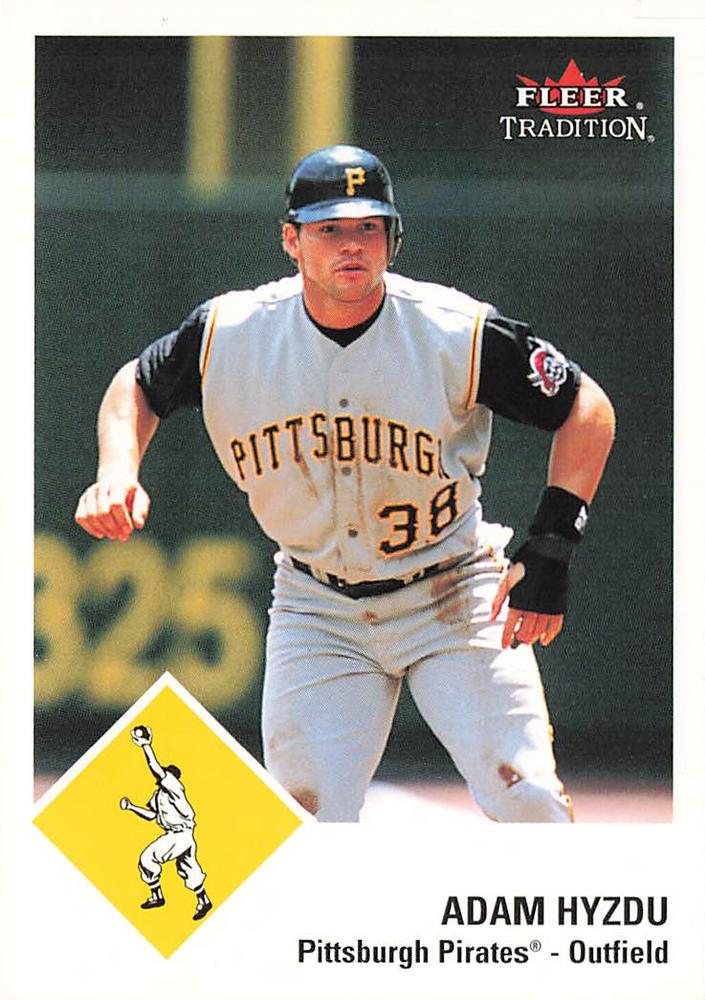
• Altoona’s Finest: The Legend of Adam Hyzdu

    By Brian Kopycinski

    In baseball, most journeymen are forgotten. Some, however, become legends in their own right. While Adam Hyzdu never fully lived up to the expectations that come with being a first-round pick, he still carved out an accomplished career at both the major and minor league levels. Best remembered for his time with the Altoona Curve, Hyzdu played nearly two decades of professional baseball, spending parts of seven seasons in the majors. Along the way, he earned Eastern League MVP honors, was named National League Player of the Week with the Pittsburgh Pirates, and won a World Series ring with the Boston Red Sox.  

    Hyzdu first made a name for himself at Cincinnati’s Archbishop Moeller High School, where he set records in both baseball and football, many of which still stand. Most notably, he hit 22 home runs, breaking a school record previously held by Ken Griffey Jr. He was also a standout quarterback and heavily recruited on the football field. While he initially committed to Mississippi State to play baseball, he instead turned professional after being selected by the San Francisco Giants in the first round, 15th overall, of the 1990 MLB Draft. He debuted that same year at age 18 with the Everett Giants in the Northwest League. 

    He reached the Giants’ Texas League affiliate in Shreveport in 1993, hitting 19 home runs between A+ and Double-A. After four years in the organization, Hyzdu was claimed by his hometown Cincinnati Reds in the 1993 Rule 5 Draft. He spent two seasons in the Reds’ system, playing well for Chattanooga in 1995 before being released ahead of the 1996 season. He then signed with Boston and delivered a breakout campaign with the Double-A Trenton Thunder, batting .337 with 25 home runs and 80 RBIs while leading the club in most offensive categories. He was promoted to Triple-A Pawtucket in 1997 and posted another strong 20-plus home run season before electing free agency. 

    In 1998, Hyzdu appeared in 34 games for the Tucson Sidewinders in the Diamondbacks’ system, hitting .340 before being loaned to the Sultanes de Monterrey of the Mexican League. After his time in Mexico, he returned briefly to Pawtucket in 1999, appearing in just a dozen games before once again entering free agency. Soon after, he joined the Pittsburgh Pirates organization after being recruited by GM Cam Bonifay to help anchor the club’s newly established Altoona Curve affiliate in the Eastern League. 

    In the franchise’s earliest days, Hyzdu quickly became its defining player. In his first season with the Curve, he hit .316 with 24 home runs, 76 RBIs, and a 1.006 OPS. Altoona finished 67–73 under manager Marty Brown in its inaugural season, but Hyzdu gave the young franchise an identity from the start. His performance earned a late-season promotion to Triple-A Nashville, where he hit five home runs in just 14 games. 

    To the surprise of many, Hyzdu returned to Altoona to open the 2000 season, and his production only climbed. He launched 31 home runs, drove in 106 runs, and hit .290 while leading the Curve to a 74–68 record. For the second straight year, he was named team MVP and also earned Eastern League MVP honors. His impact was so significant that Altoona retired his No. 16 jersey during a fireworks ceremony following the final game of the season on September 4. 

    After Altoona’s season ended, Hyzdu bypassed Triple-A entirely and was promoted directly to the majors, making his debut in Pittsburgh that September. He collected a hit in his first big league at-bat on the 8th against Cincinnati and soon after delivered his first home run, a pinch-hit, go-ahead blast in extra innings over Philadelphia on the 20th. 

    His major league career followed a familiar pattern: brief call-ups, strong flashes, and extended stretches in a limited role. While his 2001 season with Pittsburgh was quiet, he broke through in the summer of 2002. 

    Over an eight-game stretch in July, he went 15-for-30 with four home runs and 12 RBIs. On July 19, he hit his first career grand slam off Bud Smith while collecting three hits. The next day, he produced arguably the best game of his career, two three-run homers and two singles in a 15–6 Pirates win, driving in seven runs. 

    The surge earned him National League Player of the Week honors for July 15–21. He added another grand slam on August 23 at Miller Park as Pittsburgh defeated Milwaukee 6–3. In total, he appeared in 59 games in 2002, hitting 11 home runs with 34 RBIs while batting .234 with an .808 OPS. 

    The 2003 season proved difficult. Hyzdu opened the year with the Pirates but struggled in a part-time role, batting .206 with one home run in 76 plate appearances before being demoted to Nashville in August. Although he finished the year strongly in Triple-A, it marked the end of his tenure in Pittsburgh. 

    He returned to Boston in 2004 via Pawtucket and hit .301 with 29 home runs and 79 RBIs before a September call-up as the Red Sox chased the AL East title. He appeared in 17 games and hit .300, though he was left off the postseason roster. Still, he was part of the championship team that broke the Curse of the Bambino and won the World Series. 

    Hyzdu was traded to San Diego in March 2005 and later returned to Boston midseason. He again earned a late call-up as the Red Sox secured a Wild Card berth, though they were swept by the Chicago White Sox in the postseason. He was released soon after. 

    In 2006, he joined the Texas Rangers organization, spending most of the year in Triple-A Oklahoma City. He concluded his professional career in 2007 with the Fukuoka SoftBank Hawks in Japan, who advanced to the Pacific League Semifinals. 

    Across seven major league seasons, Hyzdu appeared in 221 games. His big league numbers may not stand out at first glance, but they only tell part of the story. In the minors, particularly in Altoona, he was one of the most productive hitters of his era, finishing with 1,642 hits, 273 home runs, and 1,010 RBIs across 1,703 games while batting .276. 

    More than two decades after his final season in Altoona, Hyzdu remains the standard by which every Curve player is measured. His popularity has endured long after his playing days ended, and both the city and organization have welcomed him back on multiple occasions. Today, he runs his late father-in-law’s RV dealership, RVAZ Corral, in Mesa, Arizona. He and his wife, Julie, together since their teenage years, have three children: Zac, Alexa, and Luke. Both sons went on to play baseball at the collegiate level. 
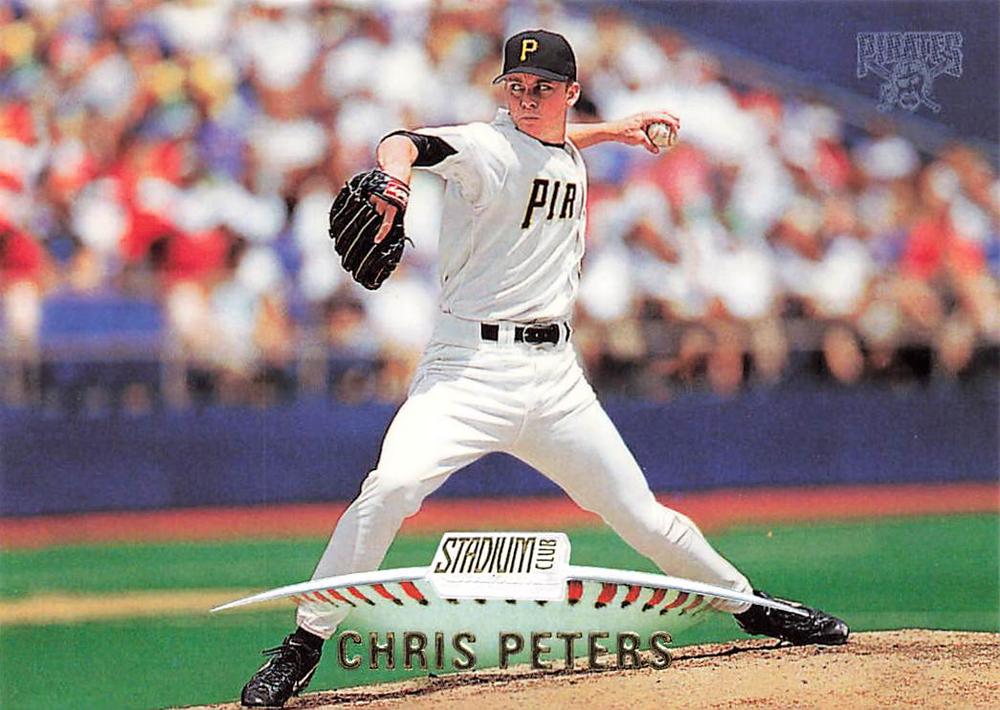
  • Chris Peters: A Baseball Odyssey

    By Brian Kopycinski

    A quick glance at Chris Peters’ Baseball-Reference page suggests very little: just six seasons in the majors, a losing record, and a career 4.81 ERA. When you look beyond the surface, however, there’s much more to his story than the numbers indicate. The same can be said for countless big leaguers who make it but fail to leave a lasting mark on the game. While fans tend to focus on the extraordinary, it’s sometimes the opposite that makes for the most compelling narratives. 

    The journey is often more important than the destination. For someone like Chris Peters, a hometown kid, his path to the show followed a traditional course. He spent time with the Pirates during a memorable stretch and, for a brief window, performed exceptionally at the highest level. Peters last pitched for Pittsburgh in 2000 and retired from professional baseball after the 2003 season. More than a decade later, he surprisingly returned to the Pirates organization in a fitting role. After so many years of losing, Peters was finally part of a winning team in Pittsburgh, just not in the way many might expect. 

    Peters was born in Fort Thomas, Kentucky, in the greater Cincinnati area. His family later moved to Peters Township in Washington County when he was a child. At Peters Township High School, Chris captained the baseball team during his senior year. He went 18-4 as a pitcher in high school and also lettered in basketball. Peters was left-handed and had a great arm, but he was undersized, listed at 6-foot-1 and 162 pounds on Baseball-Reference. He later attended Indiana University Bloomington. In three years with the Hoosiers, Peters won 19 games and struck out 224 batters while making 49 career starts. He was then selected by the Pirates in the 37th round of the 1993 draft and debuted that year for the Welland Pirates of the New York-Penn League. 

    It would be a strongly discouraging season for the big club following three straight NL East titles. “The Slide” truly began after the 1992 NLCS, marking the start of twenty consecutive losing seasons. Peters, to his credit, quickly worked his way through the Pirates system as a pitcher drafted out of college. At Advanced-A Lynchburg in 1995, he dominated with an 11-5 record, a 2.43 ERA, and 132 strikeouts in 24 starts. Peters made his major league debut the following season in relief against the Cincinnati Reds at Three Rivers Stadium on July 19. As a rookie, he made 10 starts in 16 total appearances, going 2-4 with a 5.63 ERA in 64 innings pitched. For the second straight year, the Bucs finished fifth in the division. 

    1997 was a memorable year in Pirates history, as “The Freak Show,” a ragtag group of rookies and veterans under new manager Gene Lamont, greatly exceeded expectations and pushed for the division title deep into September. Instead of losing 100 games, as many predicted, the Pirates stayed in contention with the Houston Astros for the NL Central crown before ultimately finishing five games back. Peters served primarily as a reliever on this team, though he also spent part of the season in Triple-A Calgary. He made 31 appearances out of the bullpen and posted a 4.58 ERA in 37.1 innings pitched. His best season in the majors came the following year. In 1998, Peters started a career-high 21 games and went 8-10 with a much improved 3.47 ERA across 148 innings, striking out 103 batters. 

    His finest start came on July 29, when he threw a complete game against the Colorado Rockies at Coors Field. Peters yielded just five hits while striking out seven and walking two in the Bucs’ 12-1 victory. Baseball-Reference values Peters’ 1998 season at 3.2 WAR. The Pirates rotation that year was young and unproven, consisting of Peters, Jason Schmidt, Francisco Córdova, Jon Lieber, José Silva, and Esteban Loaiza. While Córdova had the best season of the group, and there were bright spots in the lineup such as Jason Kendall and Kevin Young, the Pirates still finished dead last in the Central after seriously competing just one year earlier. 

    Brian Giles arrived from the Cleveland Indians that offseason in a one-for-one trade that sent Ricardo Rincón the other way. Giles enjoyed a career year, and the Pirates improved by nine wins en route to a third-place finish in the division. Peters, meanwhile, battled injuries and struggled in 1999. He later underwent surgery, and his arm was never quite the same. That season, he made just 11 starts, going 5-4 with a 6.59 ERA. Peters rehabbed and eventually returned to the Bucs in 2000, the final season played at Three Rivers Stadium. Used exclusively as a reliever, he delivered promising results, posting a 2.86 ERA in 28.1 innings over 18 appearances. 

    Peters was granted free agency and later signed with the Montreal Expos for the 2001 season. There, he split time between starting and relieving but struggled with his new club. Peters was released in May and later caught on with the Reds and then the Yankees, remaining in Triple-A for the remainder of the year. That proved to be his last taste of big-league action, as he spent the rest of his professional career bouncing between the minors and independent baseball. Peters spent time in the Blue Jays, Tigers, and Devil Rays organizations, along with a stint for the Newark Bears of the Atlantic League under manager Bill Madlock. 

    Adjusting to life after baseball, Peters sold cars at a South Hills dealership for a time before managing several parking lots in Downtown Pittsburgh and Oakland. He has also served as a pitching instructor and coach for local youth teams. Recently, his South Hills team reached the Pony League World Series in 2025. Peters was once the pitching coach at Point Park University as well. Though his playing days were over, he still found ways to stay involved in the game and make a difference. For years, Pirates manager Clint Hurdle wanted Peters on his staff. In 2015, that opportunity finally came, as Peters was hired as a left-handed batting practice pitcher. That Pirates team won 98 games, the franchise’s best record of the 21st century so far. While the Bucs ultimately lost to the Cubs in the Wild Card Game, those teams remain special to Pittsburghers of a certain generation. It took time, but Chris Peters finally became part of a winner with his hometown club. 

    Peters has remained active in the Pirates’ alumni network through charity work and youth camps. In 2022, he was inducted into the Pennsylvania Sports Hall of Fame as a member of the Washington/Greene County Chapter. 

  • Young Guns: Milan Kraft

    By Brian Kopycinski

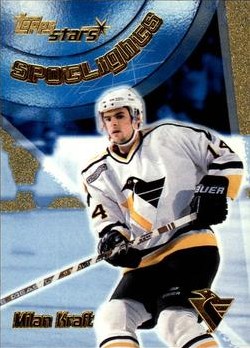
    The Pittsburgh Penguins have had great success developing talent from the Czech Republic since the early 1990s, notably Jan Hrdina, Martin Straka, and, of course, Jaromír Jágr, following the end of communist rule in the country. From Dominik Hašek to David Pastrňák, Czechia has produced some of the best in the game. While the Penguins have certainly hit on some of these prospects, others haven’t exactly worked out. One such example is Milan Kraft, a big, strong forward and former first-round pick who showed promise but left the NHL for good after the 2004–05 lockout and returned home. His career, largely overlooked, was still noteworthy given all that he had accomplished at both the amateur and professional levels

    Kraft was born and raised in Plzeň, the fourth largest city in the Czech Republic. He began his junior career with HC Plzeň, the same team his father, Milan, had played for in the 1970s and 1980s. In the younger Kraft’s debut season in 1995–96, he scored 54 goals and 41 assists in the CZE U18 league. Kraft later played in the Czech Extraliga before the Penguins drafted him in 1998. Following his selection, he moved to Canada and joined the Prince Albert Raiders of the WHL. Among the best Raiders alumni are Hockey Hall of Famer Mike Modano and Oilers star Leon Draisaitl. 

    With Prince Albert, Kraft scored 86 points and helped the team win the division title in 1998–99. He remained with the Raiders for 1999–00 and totaled 34 goals and 35 assists. 

    In what was perhaps the greatest moment of his career, Kraft and the Czech Republic defeated Russia in the 2000 World Junior Ice Hockey Championships. In the gold medal game, Kraft scored a goal in the 1–0 shootout victory to secure the country’s first title. He was named to the All-Star Team and awarded Best Forward of the tournament. 

    Kraft later joined the big club for the start of the 2000–01 season and scored his first NHL goal against the Rangers on October 14 at Mellon Arena. In his rookie year, he recorded seven goals and seven assists with the Penguins. He also played 40 games for Wilkes-Barre/Scranton in the AHL, totaling 44 points. He was named AHL Player of the Week in January 2001. The Penguins finished third in the Atlantic Division but made it all the way to the Conference Finals, losing to New Jersey in five games. Kraft appeared in eight playoff games but did not record a point. 

    After the season, the Penguins took a major blow by losing Jágr to the Capitals in free agency. Several other notable players also left via free agency or trade. Over the next few years, Pittsburgh would truly struggle for the first time since the mid-1980s, finishing at the bottom of the division. Much like the period before the arrival of Mario Lemieux, it wouldn’t be until Sidney Crosby became a Penguin that things started to turn around. Kraft split his time between Pittsburgh and Wilkes-Barre/Scranton during this stretch. His best season with the Penguins came in 2003–04, when he scored 19 goals and 21 assists. Still, the team finished in last place again. Mario Lemieux was no longer the player he once was, and a lockout was looming. 

    Kraft would go on to play for several Czech clubs over the next decade. He never returned to the NHL. While a new era of Penguins hockey was underway, Kraft went back to the Czech Extraliga. After a few seasons, he played one year for Avangard of the Russian Superleague, then returned to Czechia. Eventually, he signed with Chomutov of the Max liga, the second-tier league in the country. 

    Kraft later became the team’s captain and led the Pirates to two Czechia2 championships in 2009–10 and 2011–12. In the latter season, he totaled 22 goals and 33 assists. Chomutov was then promoted to the ELH. Kraft played one more year with the Pirates and retired after the 2012–13 season. Over his NHL career, he scored 41 goals and 41 assists. In the ELH, he notched 90 points. Since retiring, Kraft has been a youth hockey coach in the Plzeň area. His son, Daniel, most recently played for the HC Rokycany U17 team. 

    The Penguins, of course, won the Stanley Cup in 2008–09, ending a 17-year title drought. Not since the days of Lemieux and Jágr had the Pens been blessed with such talent. The core of Crosby, Fleury, Letang, and Malkin stuck together and won two more Cups in the next decade. While Milan Kraft was never a part of these teams, he still has much to be proud of. Had he returned to the NHL after the 2004–05 lockout, perhaps he could have been a productive bottom-six player in the years that followed. Kraft was a first-round pick, but it’s hard to call him a bust given his limited experience at the highest level. His career stands as one of the great “what ifs” in Penguins history. 

  • Full Circle: Tom Flynn

    By Brian Kopycinski

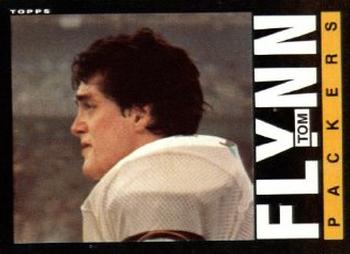
    The Pitt Panthers teams of the late 1970s through the early 1980s were among the best in the country, featuring many future Pro Football Hall of Fame talents. Arguably the greatest stretch in program history, this era of Pitt football brought championships and lasting memories. While many of its stars have been inducted into Canton, others went on to have meaningful NFL careers but have not received the recognition they deserve. One such player is Tom Flynn, a four-year starter at safety who made big plays and set records. A graduate of Penn Hills, the Pittsburgh-area native played five NFL seasons with the Green Bay Packers and New York Giants, winning a Super Bowl with New York in 1986. 

    Flynn was a dual-threat, left-handed quarterback for the Penn Hills Indians and a teammate of Pitt great Bill Fralic. Together, they won four consecutive state championships. As a senior, Flynn threw for 1,100 yards and rushed for 700. For his efforts, he was named the Pittsburgh Post-Gazette’s AAA Player of the Year in 1979. In addition to football, Flynn participated in baseball, basketball, and track and field year-round. Recruited by several notable programs, he committed to Pitt as a safety, believing the position would give him the best chance to reach the NFL. Flynn began his collegiate career as the starting free safety on Jackie Sherrill’s 1980 Panthers team. Led by Dan Marino, Pitt finished 11–1, defeating South Carolina in the Gator Bowl. 

    In his sophomore season, Flynn led the team in both tackles and interceptions. One highlight came on October 17 at Pitt Stadium, when he returned a punt 83 yards for a touchdown in a 42–14 victory over Florida State. He recorded a career-high four interceptions that season. Pitt again finished 11–1, defeating Georgia in the Sugar Bowl and capping off another championship-caliber season. Over the next two seasons, Pitt remained one of the top teams in the nation, appearing in the Cotton Bowl in 1982 and the Fiesta Bowl in 1983. Flynn once again led the Panthers in tackles both seasons. As a senior, he briefly took reps at quarterback during spring practice amid uncertainty at the position. He finished his Pitt career as the program’s all-time leader in punt return yardage (923 yards, 2 touchdowns). During his time at Pitt, he also met his future wife, Kris, a nursing student. Flynn was later selected by the Green Bay Packers in the fifth round of the 1984 NFL Draft. 

    Flynn had an outstanding rookie season in 1984. He led the NFC with nine interceptions while starting 15 of 16 games. He also contributed on special teams, returning 15 punts for 128 yards. Flynn tied for the team lead in fumble recoveries with three as the Packers went 8–8 under new head coach Forrest Gregg, who replaced Bart Starr. He also led the team with 72 solo tackles and was named Pro Football Weekly’s NFL Defensive Rookie of the Year. After such a strong debut, Flynn appeared to be on track for an elite career. However, the 1985 season marked a step back. Although he started 15 games, he recorded just one interception as the Packers again finished 8–8, trailing the eventual champion Chicago Bears. 

    The year 1986 proved pivotal in Flynn’s life. He married Kris on June 14 and, by season’s end, would earn a Super Bowl ring. After starting six of the first seven games with Green Bay, Flynn was released in mid-October as the team began to rebuild. Despite recording an interception earlier in the season, the Packers no longer viewed him as part of their long-term plans. After working out for several teams, including the Giants, Flynn returned home to Pittsburgh and played flag football for a Penn Hills team sponsored by Hippo’s Pub. Still, he believed his NFL career was not over. 

    That opportunity came quickly. In Week 8, after Giants safety Terry Kinnard suffered a knee injury, Flynn received a call and headed to New York. The Giants, now 6–2, signed him as a backup to Herb Welch. They won their next seven games and entered Week 16 with a chance to secure home-field advantage. Their opponent was the Green Bay Packers. 

    In just his second game with the Giants, Flynn made the most memorable play of his professional career against his former team. Early in the game, while lined up on the punt return unit, he broke through and blocked a punt by Bill Renner, returning it 35 yards for a touchdown (his only NFL score). The Giants went on to win 55–24. It was a full-circle moment, as Flynn once again delivered in a big spot. The play was later named Special Teams Play of the Year by The NFL Today. New York cruised through the playoffs and captured its first championship since 1956 with a victory over the Denver Broncos in Super Bowl XXI. 

    Flynn spent two more seasons with the Giants as a reserve before being released after the 1988 season at age 26. Although he received an offer from the Detroit Lions, he chose to retire and focus on life after football. Over his career, Flynn accumulated 21 Approximate Value, a metric similar to baseball’s Wins Above Replacement. He recorded 11 interceptions, forced two fumbles, recovered four fumbles, and totaled 309 all-purpose yards on special teams. His defining moment came against the team that had released him, a play that helped propel the Giants toward a championship. More than anything, Flynn was a champion. Today, he serves as a vice president at Jones Lang LaSalle, a real estate investment firm. He and his wife, Kris, reside in Murrysville and have four children, Zach, Jake, Jillian, and Zane. 

  • Flashes of Greatness: Willie Asbury

    By Brian Kopycinski

    By the late 1960s, the Pittsburgh Steelers were a struggling franchise in decline. Mediocrity defined the decade. It wasn’t until the early ’70s that the Steelers began to show life again under head coach Chuck Noll. Noll was hired in 1969 after Bill Austin was fired following another disappointing season. While Noll fared poorly in his first year on the job, with the Steelers finishing 1–13, the foundation was being laid for a championship team. “Mean” Joe Greene and L.C. Greenwood were selected in the 1969 NFL Draft. Terry Bradshaw and Mel Blount would follow in 1970. 

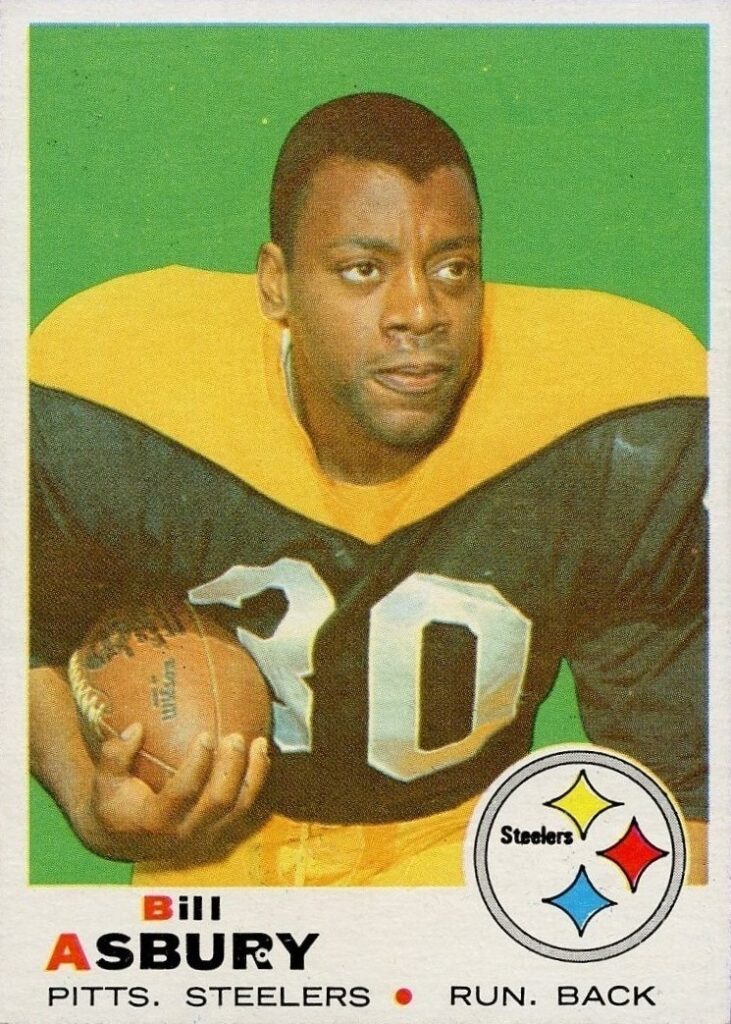
    Before the Steelers became the Team of the Decade, an unprecedented dynasty that captured four Super Bowl championships, an unremarkable culture had been the standard. While these middling teams did little in the way of winning, there was still plenty of talent in black and gold. Roy Jefferson was an All-Pro, and Ben McGee a defensive stalwart. Another standout from this era is Willie Asbury, a Kent State legend who led the Steelers in rushing as a rookie in 1966. While his playing career was short, his improbable journey to the NFL and his remarkable life after football make for a story worth telling. 

    Born in Crawfordville, Georgia, Asbury graduated from Cincinnati’s Princeton High School. The school counts several professional athletes among its alumni, including Josh Harrison and Paris Johnson. As a senior, Asbury was named All-City and All-Country in football. After graduation, he enrolled at Kent State University, about a four-hour drive northeast of Cincinnati. In his sophomore year, Asbury ran for 349 yards and three touchdowns as the Golden Flashes’ leading rusher. He missed the 1964 season after suffering a near-fatal kidney disorder. Asbury collapsed after completing a mile run during conditioning and was later diagnosed with acute renal failure. He was admitted to the hospital, lost 58 pounds, and eventually recovered. 

    Asbury returned in 1965, leading his team and conference in rushing with 998 yards and scoring six touchdowns. The Flashes went 5–4–1 that year, and Asbury was named MAC Offensive Player of the Year. He also earned Associated Press honorable mention All-American honors. In addition to football, Asbury was a track standout at Kent State, setting the school’s shot put record. He earned his bachelor’s degree in sociology in 1965. 

    Asbury was drafted by the Atlanta Falcons, an expansion team, in the fourth round of the 1966 NFL Draft. He was later cut and signed by the Steelers. Asbury had met with Art Rooney Jr. several times before the draft during his senior year, and Rooney saw great potential in him. 

    The Steelers were coming off another down year, finishing 1965 at 2–12, their second consecutive losing season. Head coach Mike Nixon was let go after just one year, and Bill Austin was brought in on the recommendation of Vince Lombardi, under whom Austin had served as an offensive line coach for five seasons. This period of Steelers history was defined by inconsistency on both sides of the ball. As noted, it would be several years before the Steelers became relevant again under Chuck Noll. Austin coached Asbury during his three years with the team. 

    As a rookie in 1966, what would be his finest season, Asbury led the team with 544 rushing yards and seven touchdowns. He started all fourteen games, wearing No. 30. He also totaled 228 receiving yards and two touchdowns. 

    He scored his first career touchdown in Week 1 at home against the New York Giants, in the second quarter of a 34–34 tie. Three different quarterbacks started for the Steelers that year, George Izo, Bill Nelsen, and Ron Smith, with mixed results. Pittsburgh finished 5–8–1, good for sixth place in the NFL East Division. 

    In 1967, Asbury split carries with Earl Gros, rushing for 315 yards and four touchdowns, while Cannonball Butler and Don Shy also contributed in the backfield. In Week 1 against the Chicago Bears, Asbury tied Minnesota’s Dave Osborn for the NFL’s longest rushing attempt that season with a 73-yard gain. In the Steelers’ 41–13 victory, he totaled 107 yards and two touchdowns. Despite Asbury’s impact, Pittsburgh failed to improve, finishing 4–9–1 and last in the Century Division. 

    1968 was Asbury’s final season in the league. He was largely a non-factor in the Steelers’ offense, with just four rushing attempts for nine yards and three catches for 27 yards in seven games. Dick Hoak emerged as a Pro Bowl talent, rushing for a career-best 858 yards. It was another dismal season for the black and gold, who finished 2–11–1. Austin was fired, and the Steelers took a new direction by hiring Noll, a defensive coach with the Chargers and Colts. 

    Heading into the 1969 season, Asbury was cut in August and retired from the game. He quickly pivoted to professional life, beginning with Sanford Rose Associates in Akron. From there, he joined the Akron Human Relations Committee and later took a position at his alma mater. He earned his M.A. in sociology from Kent State in 1973. In 1981, he was inducted into the Kent State Athletics Hall of Fame. 

    Asbury eventually joined Penn State University, serving as an Affirmative Action Officer, Assistant to the Provost, and Executive Assistant to the President for Administration. He was promoted to Vice President of Student Affairs in 1987, a position he held until 2003. 

    Willie Asbury enjoyed an accomplished career in both football and higher education. With the Steelers, he totaled 868 rushing yards and eleven touchdowns, along with 307 receiving yards and two touchdowns. His work at Penn State was just as important to him, a career that gave him renewed purpose. At 83 years of age, Asbury remains a living legend from an overlooked era of Steelers football, his legacy defined as much by his work off the field as what he accomplished on it. 

  • Local Legends: Blackhawk’s Adam Liberatore

    By Brian Kopycinski

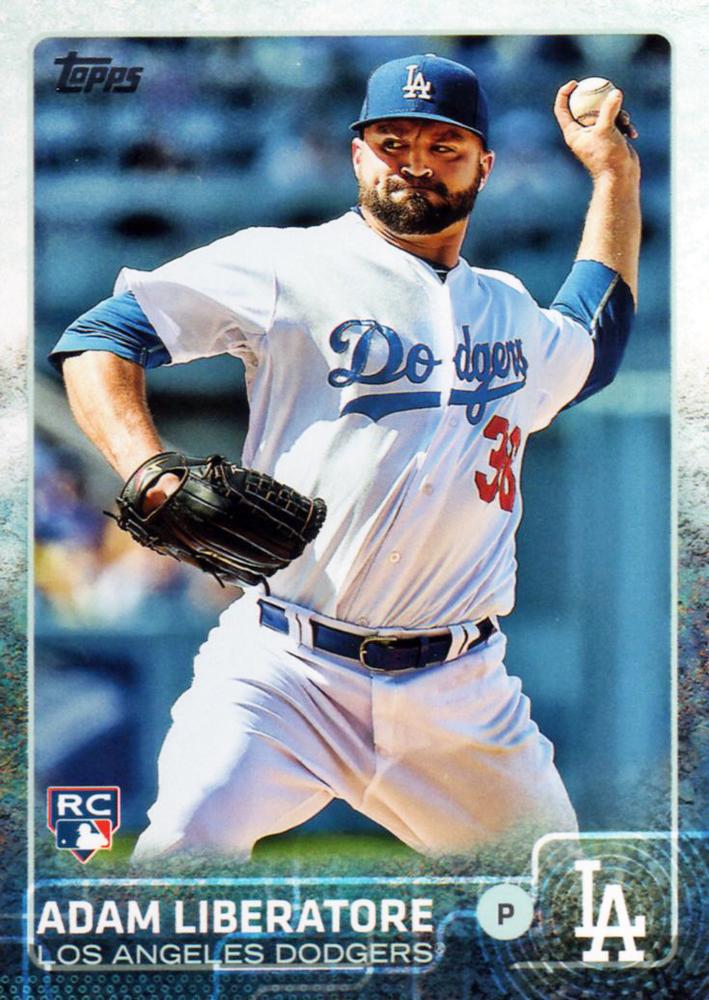
    When Adam Liberatore made his major league debut for the Los Angeles Dodgers on April 15, 2015, it marked the realization of a lifelong dream years in the making. Liberatore retired the first three batters he faced, delivering a perfect ninth inning to close out the Dodgers’ 7–3 victory over the Colorado Rockies. 

    In a matter of minutes, he had arrived. Liberatore was now part of a select fraternity that included the likes of Don Drysdale, Sandy Koufax, and Don Newcombe. A dream shared by so many had finally become reality, Liberatore was officially a Los Angeles Dodger, a member of one of baseball’s most storied franchises. Over the next few seasons, he established himself in the game he loved, culminating in a memorable moment in Dodgers history in 2018. 

    After three years at Quigley Catholic, Liberatore transferred to nearby Blackhawk, where he lettered in both baseball and soccer. An outfielder and pitcher, he starred on the diamond for the Cougars, earning WPIAL All-Star honors and first-team All-Section recognition as a senior. Liberatore then earned a scholarship to Tennessee Tech in the Ohio Valley Conference. The left-handed starter enjoyed a notable collegiate career, including an impressive stint in the Valley Baseball League with the Waynesboro Generals. That summer, he held batters to a league-best .170 average while posting a 6–1 record, earning Pitcher of the Year honors. 

    In 2009, Liberatore went 2–0 with a 2.00 ERA in three starts before an elbow injury ended his season prematurely, leading to Tommy John surgery. Prior to the injury, he shared OVC Pitcher of the Week honors following a dominant performance against Marshall on February 27. 

    Returning as a redshirt senior in 2010, Liberatore recorded 74 strikeouts in 74.2 innings, helping the Golden Eagles capture a regular-season title. He was later selected by the Tampa Bay Rays in the 21st round, 641st overall, of the June Amateur Draft. Liberatore began his professional career that summer with the Hudson Valley Renegades of the New York-Penn League. Converted to a relief pitcher, he impressed out of the bullpen, posting a 2–1 record with a 2.63 ERA in 27.1 innings. 

    Liberatore spent 2011 in High-A with the Charlotte Stone Crabs and capped the year with a strong showing in the Arizona Fall League for the Surprise Saguaros. He reached Triple-A Durham in 2012, where he posted an elite 1.29 ERA in 21.0 innings. The 2013 season was split between Montgomery and Durham, and he also pitched for Estrellas in the Dominican Winter League that offseason. 

    In 2014, Liberatore was invited to major league camp and continued to dominate at Durham, posting a 6–1 record with a 1.66 ERA in 65.0 innings. For his efforts, he was named the Rays’ Minor League Reliever of the Year. 

    That fall, he was traded to Los Angeles along with reliever Joel Peralta in exchange for pitchers José Domínguez and Greg Harris. After beginning the season in Triple-A Oklahoma City, Liberatore was eventually called up to make his long-awaited debut. The Dodgers once again proved to be a strong team, winning the NL West with a 92–70 record. Liberatore finished his rookie campaign with a 2–2 record and a 4.25 ERA in 29.2 innings. 

    In 2016, he set a Dodgers franchise record with 28 consecutive scoreless appearances, breaking John Candelaria’s previous mark of 23 set in 1991, a record that still stands today. His ERA improved to 3.38 as Los Angeles again won the division, though the team fell to the eventual champion Chicago Cubs in the NLCS. 

    The 2017 season proved to be a setback. Liberatore was optioned to Oklahoma City to begin the year and made just four appearances at the major league level before a series of injuries, including groin and forearm issues, cut his season short. 

    Heading into 2018, Liberatore was still working to solidify his place on the roster. While he had been dominant in the minors and continued to improve at the major league level, the Dodgers maintained a deep and competitive bullpen, headlined by closer Kenley Jansen. 

    After splitting a four-game road series against the Arizona Diamondbacks, the Dodgers traveled to Monterrey to face the San Diego Padres in the Mexico Series. With Dodgers legend Fernando Valenzuela throwing out the ceremonial first pitch, the event marked MLB’s return to the country after a 19-year absence. Rookie Walker Buehler started for Los Angeles and delivered six no-hit innings with eight strikeouts. 

    Holding the lead into the ninth inning, thanks to home runs from Chris Taylor and Enrique Hernández, along with strong relief outings from Tony Cingrani and Yimi García, all eyes turned to Liberatore as he took the mound to face Eric Hosmer. 

    On May 4 at Estadio de Béisbol Monterrey, Liberatore retired Hosmer, Christian Villanueva, and Franchy Cordero in order, completing the Dodgers’ combined no-hitter, the first and only such performance in franchise history to this day. In that moment, on an international stage, Liberatore etched his name into baseball lore, the high point of his career. 

    He continued to pitch effectively that season, posting a 2–1 record with a 2.77 ERA in 13.0 innings. Despite this, Liberatore was designated for assignment on August 31 and later released on September 5. He was not included on the Dodgers’ playoff roster, as the team ultimately fell to the Boston Red Sox in the World Series. 

    Following the 2018 season, Liberatore stepped away from professional baseball, not signing with another organization. In 118 career games, he finished with a 6–5 record, a 3.55 ERA, a 111 ERA+, and 93 strikeouts in 88.2 innings pitched, totaling 1.0 bWAR. 

    While those numbers may not fully capture his contributions, Adam Liberatore made history in a Dodgers uniform. He remains one of the more accomplished pitchers to come out of Western Pennsylvania. In 2025, he was inducted into the Beaver County Sports Hall of Fame. 

    Today, Liberatore runs the Liberatore Baseball Club in the Pittsburgh area, hosting camps and clinics while coaching travel teams to help develop the next generation of players. His legacy as a major leaguer endures, and his continued commitment to the community has only strengthened his influence. 

  • Johnny Ray: The Bug on the Rug

    By Brian Kopycinski

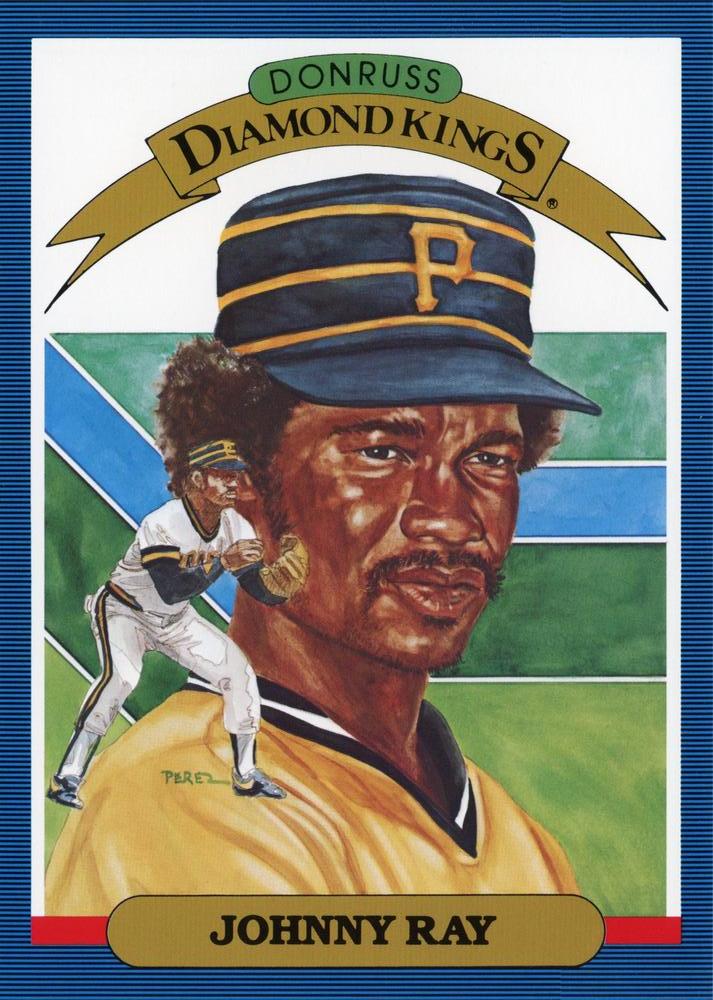
    John Cornelius Ray, a native of Chouteau, Oklahoma, was a quiet star from a largely forgettable era of Pirates baseball. The switch-hitting second baseman, consistent and durable, was one of the few bright spots in the lineup on losing teams. Always a tough out, Ray was a line-drive hitter who drove the ball to the gaps, hit for a high average, and played solid defense. His Pirates tenure has been somewhat overlooked over the years. Outside of the late Bill Mazeroski, Ray stands as arguably the next greatest second baseman in Pirates history.

    After graduating from Chouteau High School, Ray first attended Northeastern Oklahoma A&M College. In two seasons with the Golden Norsemen, he hit a whopping .439 and was named to the NCJAA All-Region team twice. Ray later transferred to the University of Arkansas. With the Razorbacks, he hit .319 in two seasons, leading the team with 47 RBIs in 1979. That year, Arkansas made it to the College World Series final, falling 2–1 to Cal State Fullerton in the championship game. Ray was a two-time All-Southwest Conference player. He was drafted by the Houston Astros in the 12th round of the 1979 MLB June Amateur Draft. 

    By 1981, Ray led the Pacific Coast League with 50 doubles for the Tucson Toros. On August 31, he was traded to the Pittsburgh Pirates with players to be named later, Randy Niemann and Kevin Houston, for “Scrap Iron” Phil Garner, a key member of the “We Are Family” Bucs. The following season, Ray became the Pirates’ everyday second baseman, starting in all 162 games. In his first month, he hit .342. After an impressive rookie campaign, Ray was named The Sporting News Rookie of the Year after slashing .281/.318/.382 with seven home runs and 63 RBIs, good for 3.8 bWAR. The BBWAA awarded its honor to Dodgers second baseman Steve Sax. 

    Over the next two seasons, Ray led the league in doubles with 38 each year. His best season with the Pirates came in ’83, when he won the Silver Slugger Award with a team-best 5.1 WAR. That year, Pittsburgh finished second in the NL East at 84–78. In ’84, Ray notched a career-best .312 average and 121 OPS+. By then, he was one of the hardest batters in the league to strike out, although he did not walk much. In 1985, Ray totaled 70 RBIs, striking out just 24 times in 594 at-bats. In Jim Leyland’s first year on the job, Ray was moved to third in the order. He had another outstanding season, was named the NL Player of the Month for April, and batted .301 with 78 RBIs in 155 games, though the Bucs stumbled to a last-place finish in the division. 

    Johnny Ray had established himself as one of the franchise’s best-hitting second basemen. Only George Grantham, a member of the 1925 World Series team, led Ray in batting average, though Grantham played more games at first than second with the Pirates. Pittsburgh was much improved in 1987, led by an exciting core of young talent. However, on August 29, Ray was traded to the California Angels for minor leaguer Bill Merrifield, father of Whit Merrifield, and a player to be named later, pitcher Miguel García. This opened a spot for José “Chico” Lind, who would man the keystone for the Bucs through the early ’90s. 

    Without Ray, the Pirates improved on their previous record in 1988, finishing second in the NL East behind the Mets at 85–75. Meanwhile, Ray himself had another career year, reaching personal bests in hits, doubles, and RBIs. He also learned a new position, playing 40 games in left field for the Halos in ’88. Ray was named an All-Star for the first time, finishing the campaign with a .306 average. In 1989, the Angels finished twenty games over .500 at 91–71, though they placed third in the AL West behind the Royals and eventual World Series champion Athletics. For Ray’s career with the Pirates and Angels, he never got to play for a true contender. 

    After the 1990 season with the Angels, Ray continued his professional career in Japan with the Yakult Swallows of the Central League. In his first season in NPB, he hit .299/.363/.480 with 11 home runs and 51 RBIs in 110 games. 1992 would be his last year in the game, as he hit just .190 in 49 games. Ray called it a career and returned home to Chouteau. That year, the Swallows won the Central League and played in the Japan Series, falling to the Seibu Lions in seven games. In ten Major League seasons, valued at 24.2 WAR by Baseball-Reference, Ray hit an exceptional .290. The only Pirates second basemen to collect more hits than him are Bill Mazeroski and Rennie Stennett. 

    Johnny Ray’s time in Pittsburgh was more than an afterthought. In the midst of controversy and scandal, the team struggled through the decade, yet Ray remained a silver lining. In franchise history, he ranks among the best at his position. Ray is a member of the Northeastern Oklahoma A&M Athletics Hall of Fame, the Southwest Conference Hall of Fame, and the University of Arkansas Sports Hall of Honor. While it is easier to remember the good times, let’s not forget players like Ray who still played meaningful baseball. They deserve more credit for their efforts—and then some. 

  • Remembering Randy McMillan

    By Brian Kopycinski

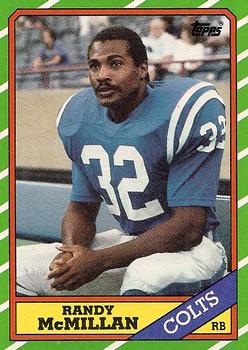
    The Pittsburgh Panthers have a history of developing prolific rushers that include Pro Football Hall of Famers, former All-Pros, and Pro Bowlers. When Lewis Lorando “Randy” McMillan transferred to Pitt, it was because of Tony Dorsett, McMillan’s idol. The Harford County, Maryland native dominated the junior college ranks at Harford Community College, leading the Owls to back-to-back undefeated seasons. After his standout sophomore season, McMillan received interest from several top collegiate programs, including Nebraska, Oklahoma, and Penn State. However, it was Pitt head coach Jackie Sherrill connecting him with Dorsett that ultimately made McMillan a Panther. 

    The Panthers teams of the late ’70s and early ’80s were among the best in the country. While Pitt hadn’t found a true successor to Dorsett after the Heisman Trophy winner departed for the NFL, many believed McMillan just might be that guy. 

    1979, in particular, was a notable year in Pitt history. It was freshman quarterback Dan Marino’s first season under center. In his first game in a Panthers uniform, McMillan made an instant impact, rushing for 141 yards in a 24–0 win over Kansas at Pitt Stadium. After a Week 2 loss to North Carolina, Pitt won out, finishing 11–1 after defeating Arizona in the Fiesta Bowl. McMillan starred in the Penn State game, scoring three touchdowns in a 29–14 victory at Happy Valley. 

    For his senior season in 1980, McMillan once again led the Panthers in rushing. Marino guided Pitt to another 11–1 season, with key victories over rivals West Virginia and Penn State. The Panthers crushed South Carolina 37–9 in the Gator Bowl and were ranked No. 2 in the final AP poll. McMillan, a primary fullback, was viewed as the top prospect at the position in the upcoming 1981 NFL Draft. 

    In two years at Pitt, he rushed for 1,354 yards and 18 touchdowns, adding 355 yards through the air on 30 receptions. While McMillan doesn’t have the numbers to rank among the very best in program history, he was a key contributor to championship-caliber teams. 

    At the Senior Bowl, Dolphins head coach Don Shula met with McMillan, letting him know Miami was very interested in him. It would be his hometown Colts, however, that selected him 12th overall. The Dolphins, who had the next pick, took Oklahoma halfback David Overstreet. 

    Baltimore’s selection of McMillan was notable, as the Colts had drafted Texas A&M back Curtis Dickey in the first round the previous year. The franchise, much like Pitt, had a rich history at the position, from Lenny Moore to Lydell Mitchell. In 1980, the Colts finished 7–9 under new head coach Mike McCormack—an improvement over their previous two seasons—but still placed fourth in the AFC East. Former league MVP Bert Jones remained the team’s signal caller. Adding McMillan gave the Colts a potentially formidable backfield duo. 

    In his NFL debut at New England, McMillan showed flashes of greatness, rushing for 146 yards and two touchdowns in a close Colts win. While Baltimore stumbled to a 2–14 record that year, McMillan had a strong rookie campaign, rushing for 597 yards and three touchdowns. 

    The 1982 season was shortened by a strike, though McMillan appeared in all nine games. McCormack was out and Frank Kush was in, with Mike Pagel taking over at quarterback. The season would go down as one of the worst in Colts history, as the team finished winless at 0–8–1.

    In their seventh game—technically Week 15—the Colts tied the Green Bay Packers. McMillan scored from one yard out in the fourth quarter to send the game to overtime.

    As the worst team in the league, the Colts were awarded the first overall pick in the 1983 draft. Baltimore had its eyes on Stanford quarterback John Elway. Elway, to put it lightly, felt differently. The Colts selected him anyway and ultimately traded him to Denver, where he would go on to a Hall of Fame career, winning two Super Bowls.

    In return, Baltimore received lineman Chris Hinton, quarterback Mark Herrmann, and a 1984 first-round pick, later used on Ron Solt. Needless to say, Denver won the trade by a wide margin. 

    In what would be their final year in Baltimore, the Colts were much improved in 1983. McMillan contributed over 800 rushing yards and five touchdowns, while Dickey surpassed the 1,000-yard mark. Still, a 7–9 record wasn’t enough, as the Dolphins—led by rookie quarterback Dan Marino—won the division at 12–4. 

    What happened next was heartbreaking for Baltimore fans. In the middle of the night, owner Robert Irsay moved the team to Indianapolis. The relocation had been rumored for years, but its execution stunned the city. McMillan, a hometown player, didn’t take the news lightly—nor did his teammates or the fan base. The Colts would begin the 1984 season in Indianapolis at the Hoosier Dome. 

    Dickey, an injury-prone player, missed time in 1984, allowing McMillan to step up. While the Colts finished 4–12, McMillan totaled 906 yards from scrimmage. 

    Another note from that season: Art Schlichter, one of the biggest draft busts in NFL history, started five games and struggled, going 0–5 with three touchdowns and seven interceptions. The Colts had selected him fourth overall in 1982. This once-proud franchise was clearly on hard times, and McMillan remained one of its few bright spots. 

    His best season came in 1985, when he rushed for 858 yards and seven touchdowns, adding 115 receiving yards. With Dickey sidelined and later released, McMillan carried a larger share of the load. It’s a shame he never had the opportunity to play for a true contender, spending his career on struggling teams. 

    The 1986 season brought more of the same. Rookie quarterback Jack Trudeau went 0–11 as a starter, and head coach Rod Dowhower was fired after a 0–13 start. McMillan again led the team in rushing in what would tragically be his final NFL season. 

    In April 1987, McMillan was severely injured in a car accident while crossing the street near his home, effectively ending his career at just 29 years old. Both the tibia and fibula in his left leg were shattered, and he suffered nerve damage. He also required plastic surgery on the right side of his face. A metal rod and four screws were inserted, and McMillan underwent more than a year of rehabilitation. 

    In the aftermath, owner Robert Irsay banned McMillan from team facilities, citing him as a “liability.” His contract was disputed, as the injury was considered “non-football related.” The two sides eventually settled for half of his $320,000 salary. While sidelined for the 1987 season, McMillan could only watch as the Colts traded for star running back Eric Dickerson. The message from the front office was clear: he was no longer part of the team’s plans. 

    McMillan was released before the start of the 1988 season. He briefly caught on with Miami—the team that had first shown interest in him—but was cut after two weeks. At that point, he decided to retire. Over six seasons, all with the Colts, McMillan rushed for 3,876 yards and 24 touchdowns. 

    In the years that followed, McMillan worked various jobs, including a stint on the Purdue football staff. After fully recovering from his injuries, he developed a passion for jogging. 

    Sadly, in 2002, he was involved in another car accident that left him partially paralyzed. He later spoke about the experience in a 2005 interview with The Baltimore Sun. Through activity-based therapy, he made a remarkable recovery and was eventually able to walk again. 

    McMillan was a private man, and that interview offers a rare glimpse into his life after football. He passed away on January 7 of this year at the age of 67. No cause of death has been reported. This profile serves as a tribute to his life and lasting legacy, both on and off the field. 

  • Randy Grossman: “The Rabbi”

    By Brian Kopycinski

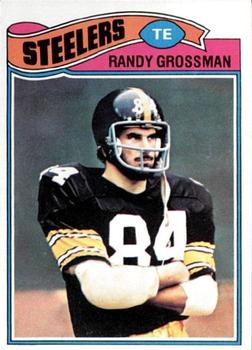
    The Pittsburgh Steelers dynasty of the 1970s is widely considered to be the greatest in NFL history. While most remember the stars like Bradshaw, Franco, and “Mean” Joe, these well-rounded teams consisted of a number of unheralded contributors. Some have gotten the recognition they deserve in the years since, while others have been largely forgotten. While never superstars, these men of steel were players you couldn’t win without. One that stands out to me is Curt “Randy” Grossman, a highly underrated tight end from an era that prioritized the run game. Grossman, an undrafted free agent, was with the Steelers for the entirety of this unprecedented run. 

    Nicknamed “The Rabbi,” courtesy of teammate Dwight White, Grossman was a standout at Temple University before he joined the Steelers. He was born in Philadelphia and raised in the suburb of Havertown, attending Haverford High School. Temple, an independent program at the time, went 9–1 during Grossman’s senior year in 1973, when he led the team in receptions (39) and receiving yards (683). A relatively undersized tight end for the NFL, Grossman battled it out in camp and the preseason to make the team. In 1974, Larry Brown, who later converted to tackle, emerged as the Steelers’ top option at tight end. Grossman contributed 13 receptions for 164 yards in his rookie year, as the Steelers began their dynasty with a win over the Minnesota Vikings in Super Bowl IX. 

    Grossman scored his first career touchdown in Week 2 of the 1975 season, a 20-yard pass from Joe Gilliam in a close home loss to the Buffalo Bills. He totaled 135 yards on the campaign, as the Steelers went on to repeat as AFC Central champions with a 12–2 record. In the postseason, Grossman made an impact. In the AFC Championship versus Oakland, he added four catches for 36 yards, and he scored a touchdown in the first quarter of Super Bowl X against Dallas. In the 1976 NFL Draft, Pittsburgh selected Clemson tight end Bennie Cunningham in the first round. Undeterred, Grossman had another fine year. As a rookie, Cunningham remained a backup, while Grossman totaled 181 yards. Though Cunningham was viewed as the future, Grossman still factored into the Steelers’ long-term plans. That year, the Steelers once again won the division but later fell to their greatest rival, the Oakland Raiders, in the Conference Championship. 

    Cunningham emerged as the Steelers’ TE1 in 1977, breaking out with 347 yards and two touchdowns. Grossman became somewhat of an afterthought, hauling in just five passes for 57 yards. The Steelers went 9–5 that year but made an early playoff exit in the Divisional Round against Denver. Cunningham began 1978 as the starter, but an injury cut his season short. Grossman stepped up in his absence in what would be the greatest campaign of his career. His 448 receiving yards were the third-best mark on the team, behind only Lynn Swann and John Stallworth. Grossman’s 64.8 success rate was the best in the league. Pittsburgh returned to the postseason with a vengeance and made it back to the big game to face Dallas in a rematch of Super Bowl X. Grossman had three catches for 29 yards in Super Bowl XIII, as the Steelers defeated the Cowboys to claim their third Lombardi Trophy. 

    In the City of Champions, 1979 was a special year. The “We Are Family” Bucs defeated the Baltimore Orioles in a classic World Series that went seven games. The Steelers, at the height of their dynasty, cruised through the playoffs and defeated the Los Angeles Rams in Super Bowl XIV, giving Randy Grossman his fourth Super Bowl ring. Reliable as ever, Grossman continued to produce, giving the Steelers a one-two punch at the tight end position with Cunningham leading the way. The beginning of the new decade unofficially marked the end of the Steelers’ dominance. This regression was inevitable, as the core of talent aged together and neared the ends of their careers. In 1981, Grossman’s final season, Pittsburgh went 8–8 and missed the playoffs for the second consecutive year. Grossman scored his last touchdown in a Week 11 win over the Atlanta Falcons. 

    Over eight seasons, Randy Grossman totaled 1,514 yards and five touchdowns. His contributions in the postseason made a difference and helped the Steelers win when it mattered most. He was never a star in his time, like the Raiders’ Dave Casper or the Lions’ Charlie Sanders, but he was a steady, dependable target on four Super Bowl teams. Like Cunningham, Grossman has gone seriously overlooked in team history at the tight end position. While names like Heath Miller and Eric Green are often at the top, you can’t forget about players like Grossman who contributed meaningfully to the franchise. While never garnering headlines, it’s players like Randy Grossman who help you win championships. 

    Grossman is a member of both the Temple University Athletics Hall of Fame and the Philadelphia Jewish Sports Hall of Fame. After retiring as a player, he went on to a successful career in finance as an independent advisor with his firm, Wealth Management Strategies. Grossman and his wife Barbara have three children and three grandchildren. 

  • Between the Pipes: Michel Dion

    By Brian Kopycinski

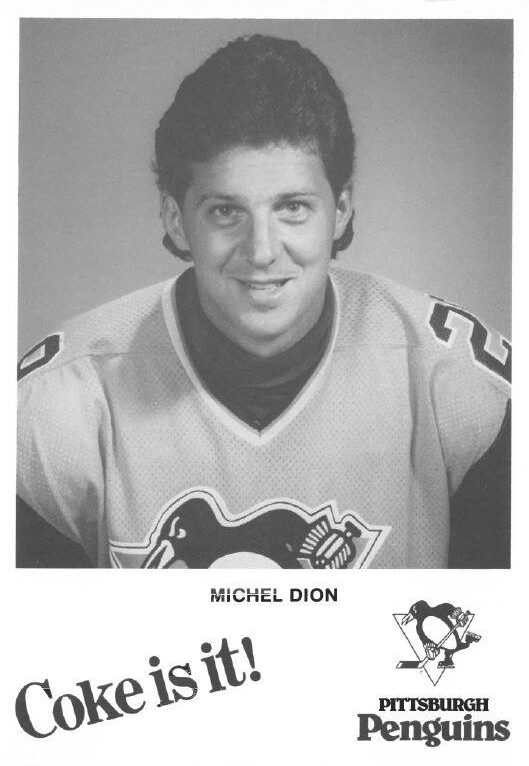
    Born and raised in Montreal, former Pittsburgh Penguins goaltender Michel Dion began his professional career not in hockey, but with his hometown Montreal Expos. Following a notable junior hockey career, Dion went undrafted and later signed with the Expos, hoping to make it as a big-league catcher. His skills as a goalie translated well behind the plate, but it would not be long before he recommitted fully to hockey. Selected by the Indianapolis Racers of the rival WHA, Dion found immediate success at the professional level. 

    As the NHL and WHA eventually merged, Dion caught on with the Quebec Nordiques in his native province. After quitting on his team mid-game, he was soon traded to the Winnipeg Jets. Later becoming a free agent, Dion signed with Pittsburgh and enjoyed a career year, making the All-Star Game and finishing third in Vezina Trophy voting. That postseason, the Penguins nearly upset the reigning Stanley Cup champions, the New York Islanders, at the height of their dynasty. Through both triumph and turmoil, Dion’s strong faith sustained him. 

    Dion first found success in junior hockey before signing with the Expos. He excelled between the pipes for the Junior Canadiens of the OHA and the Red White and Blue of the QMJHL, both based in Montreal. After turning pro in baseball, Dion headed south. In 1972, he reached Class A with the West Palm Beach Expos of the Florida State League. Following a brief stint with the Cocoa Expos, he was promoted to West Palm Beach, where he backed up a future Hall of Famer, Gary Carter. 

    Dion showed promise at the plate, hitting .300 in ten at-bats. However, as a singles-hitting catcher lacking the power of Johnny Bench, he realized his future likely lay in hockey. Returning to the QMJHL with the Montreal Juniors, Dion was eventually drafted 121st overall by the Racers in the 1974 WHA Draft. He began his pro hockey career with the Mohawk Valley Comets before earning a call-up to Indianapolis. 

    The Racers’ inaugural season was 1974–75, and Dion appeared in just one game before opening the following year back in Mohawk Valley. His return to the WHA during the 1975–76 season proved spectacular. Dion posted a league-best 2.74 goals-against average and captured the Ben Hatskin Trophy as the WHA’s top goaltender. Indianapolis finished first in the East Division but fell in seven games to the New England Whalers in the quarterfinals. 

    Dion spent the entire 1976–77 season with Indianapolis as the team improved and returned to the playoffs, defeating the Cincinnati Stingers before losing to Quebec in the division finals. As a free agent, Dion signed with Cincinnati for 1977–78, winning 21 games and leading the league with four shutouts. After another season with the Stingers, he was selected by the Nordiques in the 1979 Dispersal Draft, returning home as the franchise entered the NHL. 

    Quebec faced its soon-to-be rival, the Montreal Canadiens, for the first time on October 13 at the Montreal Forum. Despite a 3–1 loss, Dion was named the game’s first star. Two weeks later, the Nordiques earned their first victory in the rivalry with a 5–4 win at the Quebec Coliseum. Still, Quebec struggled overall, finishing fifth in the Adams Division. 

    The following season brought excitement with the arrival of Peter Šťastný, but also one of the lowest moments of Dion’s career. In a home game against the Boston Bruins, Dion surrendered four goals before throwing his gear aside and leaving mid-game, driving straight to Montreal. He was eventually traded to Winnipeg in February. 

    After just 14 games with the Jets, Dion’s tenure ended. Pittsburgh took a chance on him in June 1981, desperate for stability in goal after Greg Millen struggled the previous season. With the opportunity to reclaim a starting role, Dion exceeded all expectations. 

    The 1981–82 season marked the pinnacle of Dion’s career. He won 25 games—his personal best—and was named the starting goaltender for the Wales Conference at the 34th NHL All-Star Game at the Capital Centre. The Wales Conference defeated the Campbell Conference 4–2, with Mike Bossy earning MVP honors. Dion finished third in Vezina voting, behind Islanders goaltender Billy Smith. 

    That postseason, Pittsburgh came within one game of eliminating the powerhouse Islanders in the division semifinals. New York jumped to a two-game lead before the Penguins rallied to force a decisive Game 5 at Nassau Coliseum. The Islanders prevailed 4–3 in overtime on a goal by John Tonelli. 

    Following the heartbreaking loss, both Dion and the Penguins declined. By 1984–85, Dion had been demoted to the Baltimore Skipjacks and appeared in just 10 NHL games. After that season, his professional career came to an end. 

    Dion retired following the 1984–85 season and later settled in Hilton Head, South Carolina, where he became a certified golf instructor. Drawing from his time in the Expos organization, Dion embraced life in the South and discovered a new passion in teaching. 

    His legacy in Pittsburgh also includes introducing the team chapel concept alongside teammate Paul Baxter. First exposed to the idea in Cincinnati, Dion later brought it to Quebec and continued the tradition with the Penguins—an enduring reflection of the faith that guided him throughout his career.